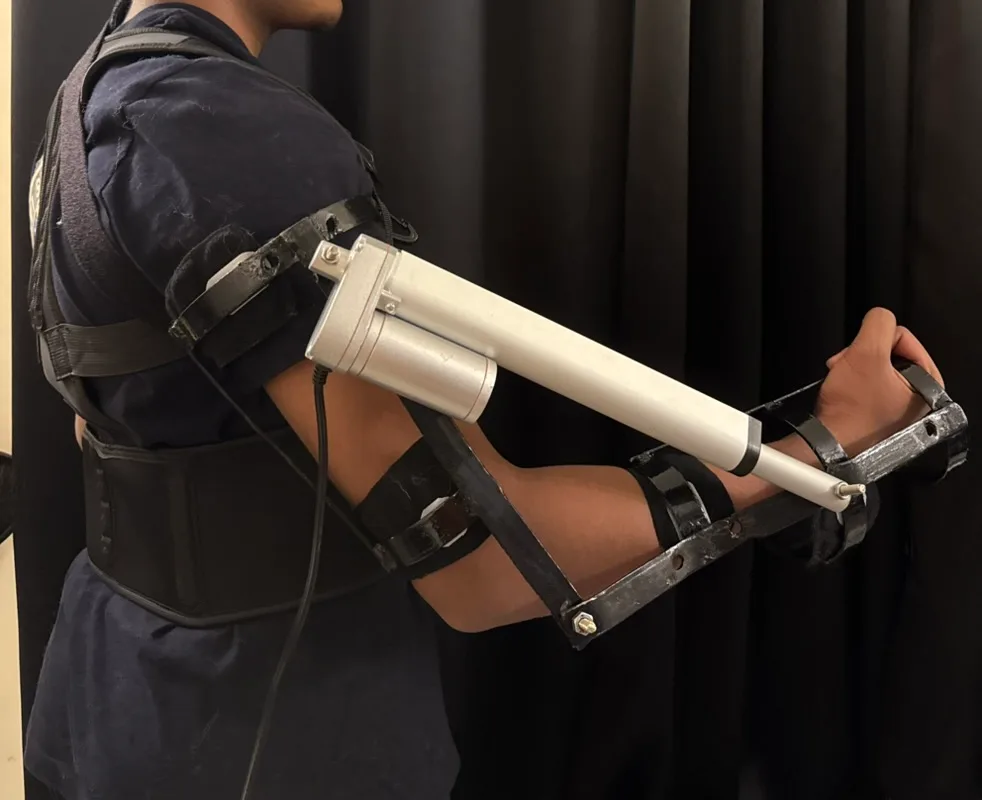
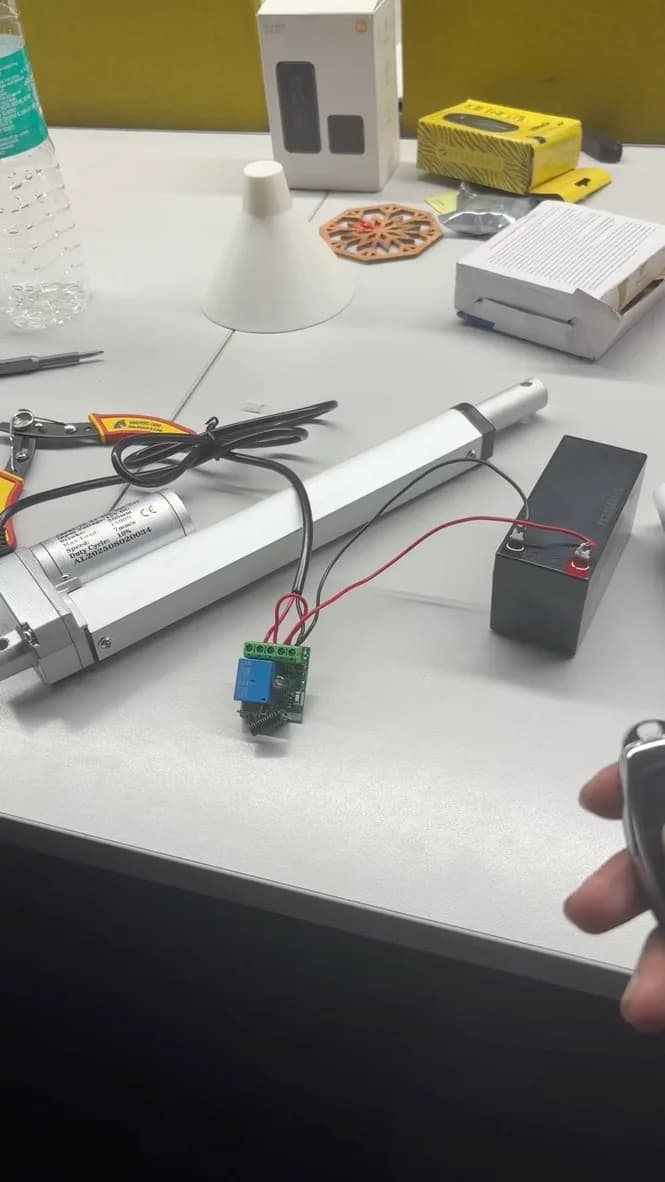
LOG_ID: #04122026.Q1
Fit + range-of-motion test
Worn-frame testing for pressure points and free arm travel. Several mounting assumptions from paper did not survive a moving prototype.
PROJECT // ROBOTICS / 01
REV 2025-2026
A wearable robotic exoskeleton built to augment arm strength and cut fatigue in physically demanding work. More than a device, a study in how engineers take a hard real-world problem from sketch to prototype.
LIFT· HOLD
LINEAR
1DOF
V1PROTO
TIMEFRAME
2025-2026
BUILD
SOLO
Worn-frame testing for pressure points and free arm travel. Several mounting assumptions from paper did not survive a moving prototype.
Bench-tested the linear actuator for usable assistive force and travel before committing it to the worn frame.
Enough structure to mount the actuator, anchor to the arm, and turn assumptions about assist into measurements.
Design moved from assist-the-whole-arm to assist-the-part-that-matters. Factory visits reframed what buildable means.
Compared motors, pneumatics, and linear actuators on force, weight, response, and control complexity. Linear won.
PROTOTYPE, NOT A PRODUCT
PX-1 is a working v1 prototype built to validate the core idea, not a shipped device. Specs describe design intent and build decisions, not certified performance.
PX-1 is a wearable robotic exoskeleton for the human arm. It assists lifting and holding loads to reduce strain and fatigue in physically demanding environments: factory floors, workshops, repetitive manual work.
I didn't build it to ship a product. I built it to find out how an engineer actually takes a problem this size from a blank page to something that exists. The arm is the artifact. The process was the point.
Physical work wears the body down in ways that are easy to overlook. Repeated lifting and sustained holding load the shoulder and upper arm long before anyone calls it an injury. Fatigue compounds, precision drops, and the cost lands on the people doing the work.
The question I set out to answer was narrow on purpose: can a wearable add meaningful assistive force to the arm without getting in the operator's way, without being heavy enough to create its own fatigue, and without being unsafe to wear?
I spent the first stretch reading before building anything. The work split into a few areas:
Talking to people who build real hardware changed the project more than any single paper. Factory visits and conversations with experienced engineers reframed what "good enough" means when a thing has to survive contact with the real world.
Early concepts explored where the assist should come from and how the frame would anchor to the body. Most of the first ideas were too ambitious for what I could actually build and test, which was useful, because it forced me to separate what was interesting from what was buildable.
The design moved from "assist the whole arm" to "assist the part that matters most, well." Each iteration traded ambition for something I could prototype, measure, and learn from. Cutting scope wasn't a compromise. It was the only way the project produced real answers instead of a render.
The decision I spent the most time on was actuation. Linear actuation won for this build: it mapped cleanly onto the motion I was assisting, kept the control problem tractable for a first prototype, and let me reason about force and travel directly. Material and mounting choices followed from two constraints that never moved: keep it light enough not to become its own source of fatigue, and make the way it attaches to the body fail safe, not fail dangerous.
The first working prototype was deliberately unglamorous: enough structure to mount the actuator, anchor to the arm, and let me actually feel and measure assist. The goal of v1 was never to look finished. It was to turn assumptions into data.
Testing was where most of the learning happened. Bench tests checked the actuator could deliver useful force; fit tests checked the frame could be worn without creating new problems. A lot of what I believed on paper didn't survive contact with a worn, moving prototype, which is exactly what testing is for.
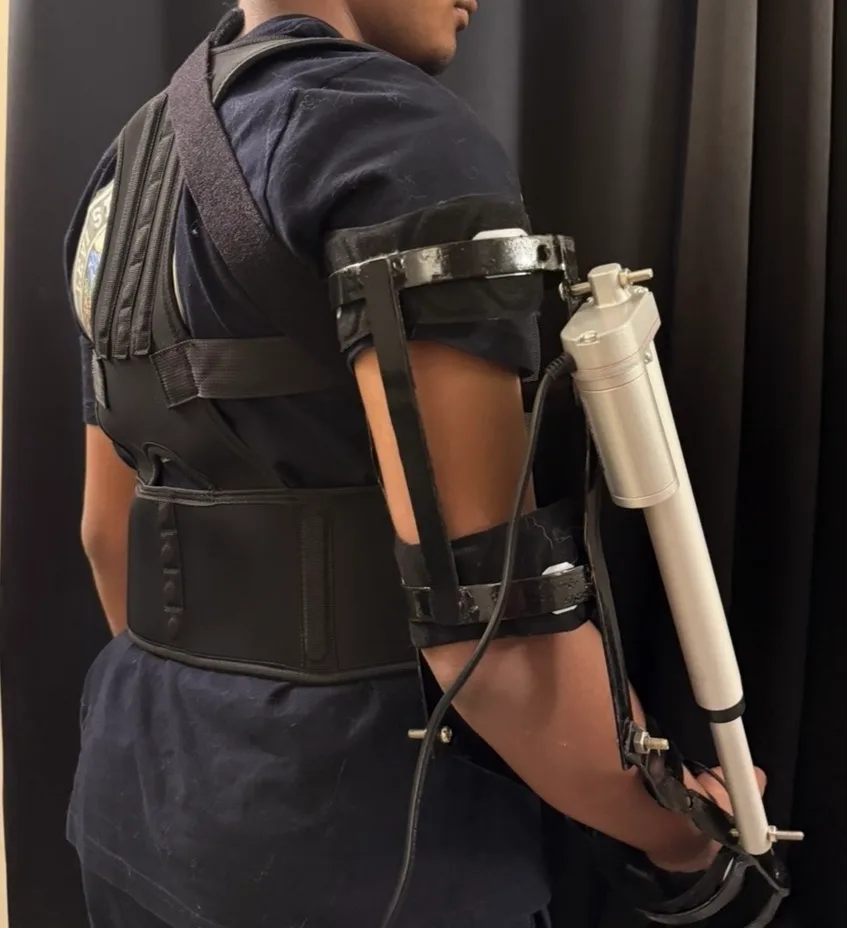
Working toward something manufacturable forced a different kind of thinking than working toward something that merely functions. Factory visits made the gap between "it works on my bench" and "it could be made repeatably" concrete. I came away with far more respect for the distance between a prototype and a product.
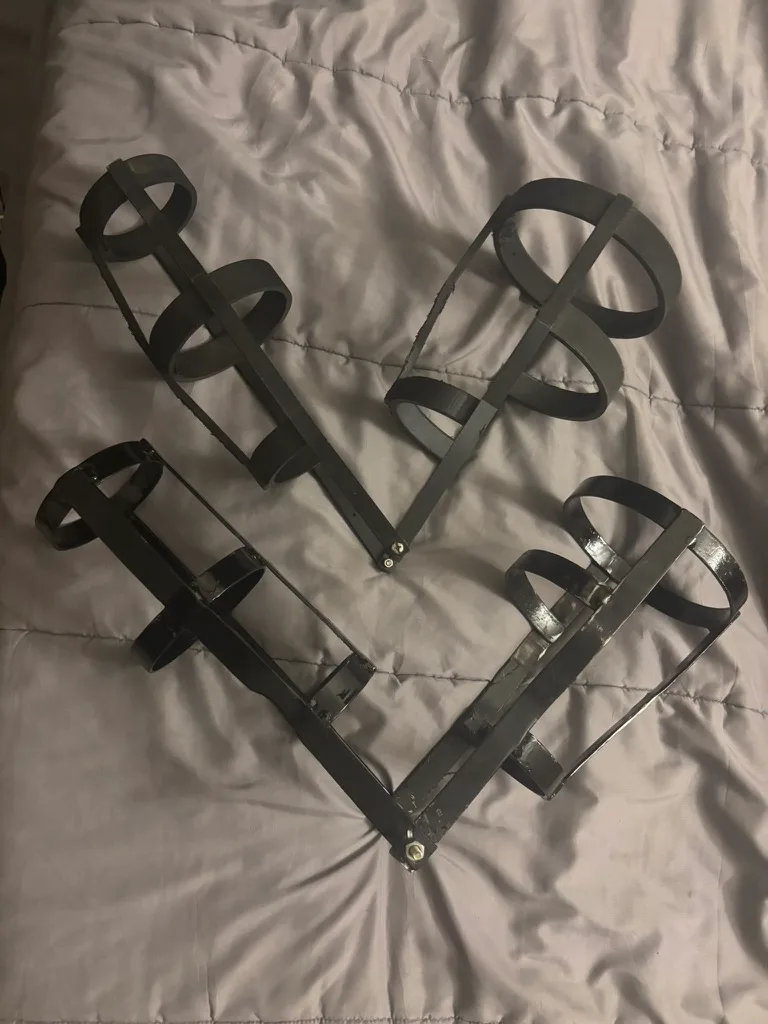
Plenty went wrong. Early mounting ideas were uncomfortable or unstable. Some assumptions about force were optimistic. A few parts were over-designed for problems that didn't matter and under-designed for ones that did. None of these were wasted; each failure was a measurement that pointed at the next decision. Writing them down honestly is part of the project, not a footnote to it.
PX-1 ended as a working prototype that demonstrated the core idea: meaningful, controllable arm assist in a wearable frame, and, more importantly, a clear map of what I'd change in a v2 and why. It did the job I actually set for it: it taught me how hard problems get solved in steps, under real constraints, by people willing to be wrong on the way to being right.
The biggest lesson wasn't mechanical. It was that the quality of a build is set long before any part is made, in how sharply the problem is framed and how honestly each result is read. PX-1 is the project that turned "I want to do robotics" into "I know what doing robotics actually demands." Everything I build now starts from that.